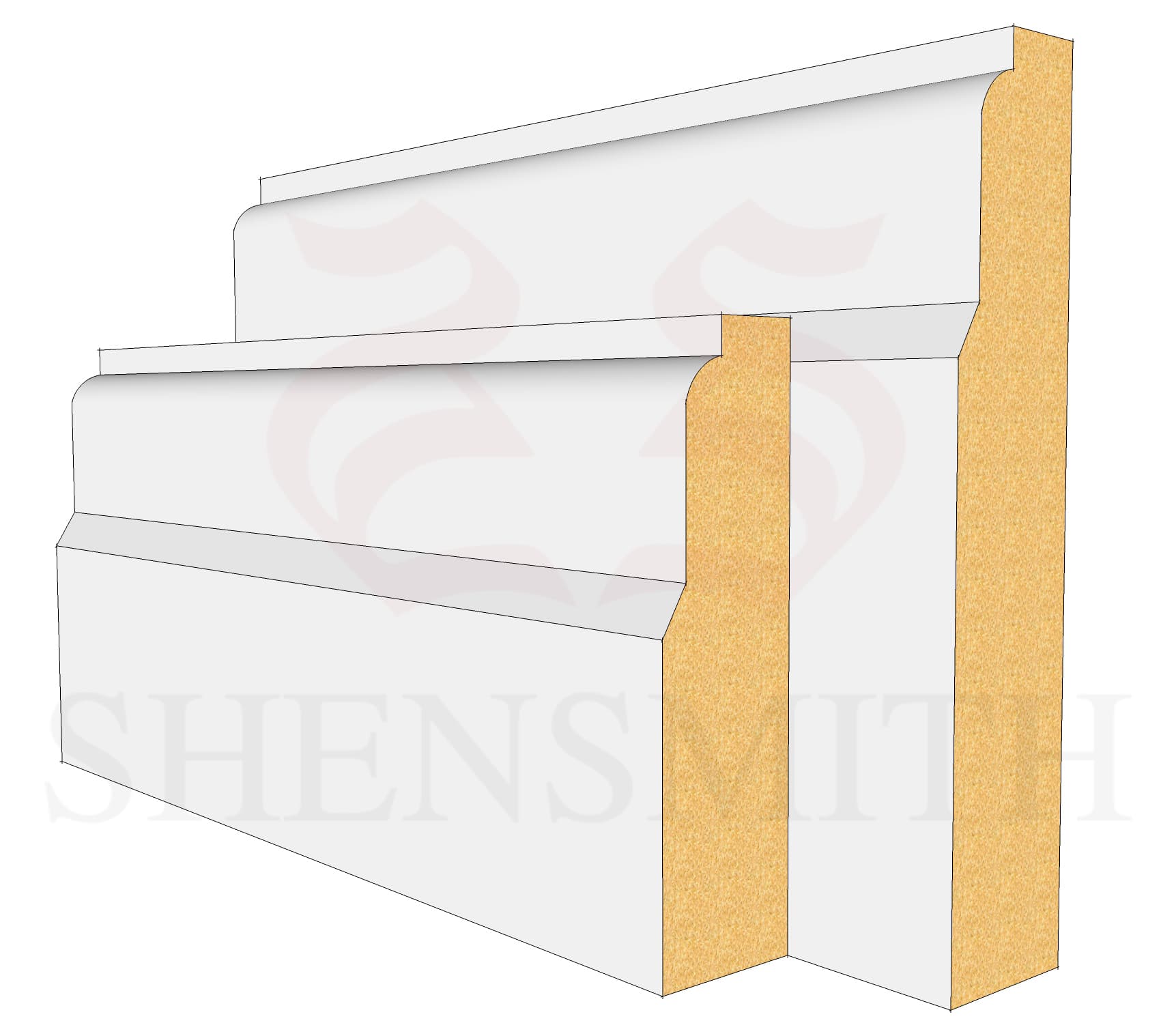
A shaped surround with traditional character
Lamb’s tongue architrave adds a more detailed outline than a plain rounded-edge board. Its appeal lies in the relationship between the curve, flats and changes of level rather than in one universal shape.
Compare before matching
Check an existing surround against an end-section photograph or a physical sample. Different lamb’s tongue patterns can share a name while having noticeably different curves. Measure the overall width and thickness and record the decorative section separately.
Coordinate with the skirting
A matching family can connect the doorway to the rest of the room, but the two pieces may use different proportions. Lay the samples together at the lower junction to assess both the moulding and the projection from the wall.
Give the detail room
Check space beside the frame and plan the head corners so the moulding reads continuously. A wider surround is not automatically a better one: the scale of the door, the available wall and the existing room details should guide the choice.
Materials, sizes and enquiries
Confirm the material, width, thickness and lengths needed for both legs and the head. Check whether pieces are supplied bare, primed or finished, and allow for cuts. The profile directory describes design families; it does not confirm stock, delivery or a universal size.
Your questions, answered.
Can I use lamb’s tongue architrave with matching skirting?
Yes, matching profile families can create a coordinated room. Compare the actual sections, thicknesses and proportions, because a shared name does not guarantee an exact dimensional match.
What do I measure for lamb’s tongue architrave?
Measure the frame and available wall space, choose a suitable width and thickness, and plan both upright legs and the head with an allowance for your corner joints. Check each opening on site.